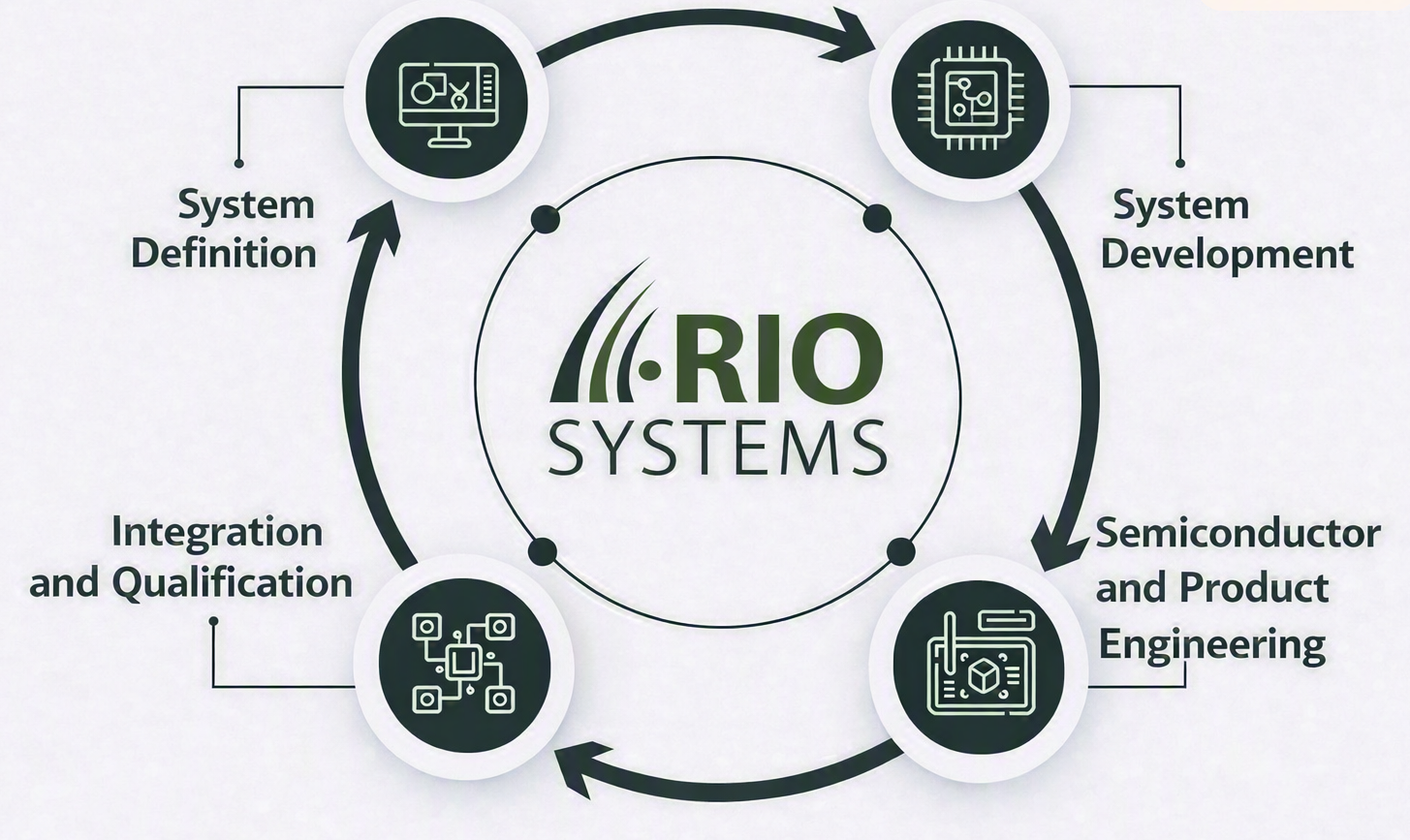
SYSTEM AND
SUB-SYSTEMS
SYSTEM AND SUB-SYSTEMS
Modern Active Electronically Scanned Array (AESA) systems represent the convergence of several critical engineering disciplines, each indispensable to achieving the performance, reliability, and manufacturability demanded by today’s defense and commercial platforms.
Communication Systems are central to AESA design in wireless and satellite applications, where electronically steered apertures enable high-throughput, reconfigurable connectivity across terrestrial and space-based networks. In wireless communications, AESA technology supports beamforming and spatial multiplexing critical to 5G/6G infrastructure, allowing dynamic multi-user beam steering, interference mitigation, and improved spectral efficiency. In satellite communications, AESA arrays enable mechanically-free tracking of fast-moving LEO satellites, rapid handoffs between spacecraft, and simultaneous multi-beam link, capabilities essential for maintaining connectivity across large, dynamic constellations. These demands push AESA design toward wider bandwidths, lower SWaP footprints, and tighter integration between RF front-ends and digital beamforming, making communication systems expertise a key driver of next-generation array innovation.
Radar systems have been transformed by AESA technology, which replaces mechanically steered antennas with electronically controlled arrays of transmit/receive modules that steer beams at electronic speed. This enables rapid, simultaneous multi-target tracking, adaptive beam agility, and the ability to interleave search, track, and jamming functions within milliseconds, capabilities essential for contested, high-threat environments. AESA radars also offer graceful degradation, since the failure of individual elements causes gradual performance loss rather than total system failure, along with improved reliability and reduced maintenance compared to mechanical systems. Combined with advanced signal processing, AESA radars deliver superior resolution, low probability of intercept, and resistance to jamming, making them a cornerstone of modern surveillance and defense systems.
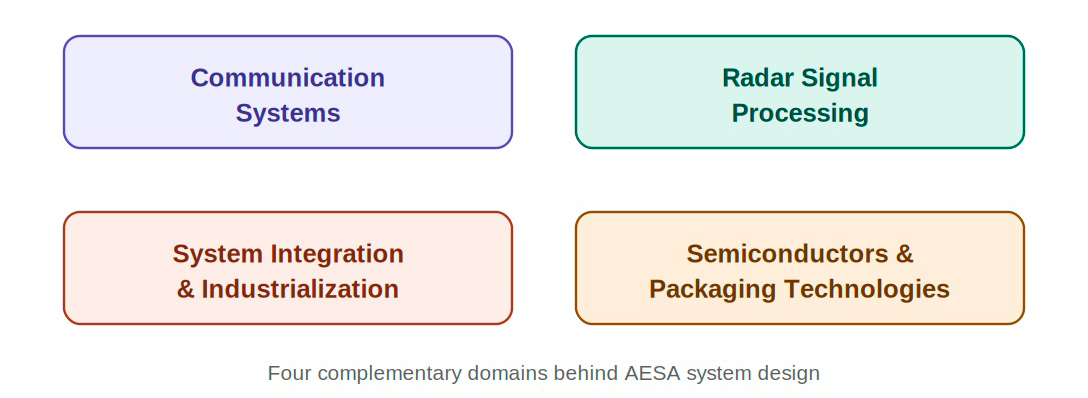
At RIO SYSTEMS, we specialize in the critical knowledge domains that underpin the development of next-generation Active Electronically Scanned Array (AESA) systems. Recognizing that no single organization can master the full breadth of expertise these systems demand, we work in close partnership with engineering-based organizations aligned with our vision and goals, complementing their capabilities with deep, focused knowledge across four core disciplines: Communication Systems, Radar Signal Processing, System Integration and Industrialization, and Semiconductor & Packaging Technologies.
With a strong foundation in semiconductor, RF domain expertise, and system-level design, RIO SYSTEMS is uniquely positioned to pursue its ambition of delivering complete, system-level AESA solutions rather than isolated components. Deep knowledge of key technologies provides the technical grounding needed to optimize system design from the ground up. This is complemented by system integration expertise that ensures individual building blocks come together into a cohesive, reliable, and manufacturable architecture. Together, this dual mastery of the physical hardware layer, software and the integration discipline required to unify complex subsystems allows RIO SYSTEMS to move beyond point solutions, engaging with engineering partners not just as a technology contributor, but as a system-level enabler capable of addressing the full complexity of modern AESA development.